


Autonomous Robots: How Machines Learn to See, Think and Move
From warehouse robots and delivery machines to underwater vehicles, autonomous robots are transforming the way machines interact with the physical world.
A robot becomes truly autonomous when it can observe its environment, understand what is happening, make decisions and take action without requiring a human to control every movement.
What Is an Autonomous Robot?
An autonomous robot is a machine capable of performing tasks and making decisions with limited or no continuous human control.
Unlike a simple remote-controlled machine, an autonomous robot continuously collects information from its sensors, estimates its current situation, plans what it should do next and sends commands to its actuators.
Sense → Understand → Decide → Plan → Act → Repeat
This loop is at the heart of almost every autonomous robotic system.

Autonomous robotics combines mechanical systems, electronics and software.
Remote-Controlled vs Autonomous Robots
The easiest way to understand autonomy is to compare it with traditional remote-controlled robotics.
| Capability | Remote-Controlled Robot | Autonomous Robot |
|---|---|---|
| Movement | Human controls movement | Robot controls movement |
| Navigation | Human chooses the route | Robot can calculate a route |
| Obstacle avoidance | Human reacts to obstacles | Robot can detect and avoid obstacles |
| Decision making | Mainly performed by operator | Performed by onboard software |
| Communication loss | Robot may stop responding | Can execute a predefined fail-safe |
How an Autonomous Robot Works
An autonomous robot is not a single algorithm. It is a collection of interconnected systems working together in real time.
Sensors
👁️
→
Perception
🧠
→
Localization
📍
→
Planning
🗺️
Sensors
→
Control
⚙️
→
Motors
🔧
→
Movement
🤖
1. Sensors: The Robot's Senses
Robots cannot see, feel or understand the world in the same way humans do. Instead, they depend on sensors to collect information.
| Sensor | What It Measures | Typical Use |
|---|---|---|
| Camera | Visual information | Object detection, navigation |
| LiDAR | Distance to objects | Mapping and obstacle avoidance |
| IMU | Acceleration and rotation | Orientation and motion estimation |
| GPS / GNSS | Global position | Outdoor navigation |
| Wheel Encoder | Wheel rotation | Odometry |
| Depth Sensor | Depth information | 3D perception |
| Pressure Sensor | Pressure / depth | Underwater robotics |
| DVL | Velocity relative to seabed | Underwater navigation |
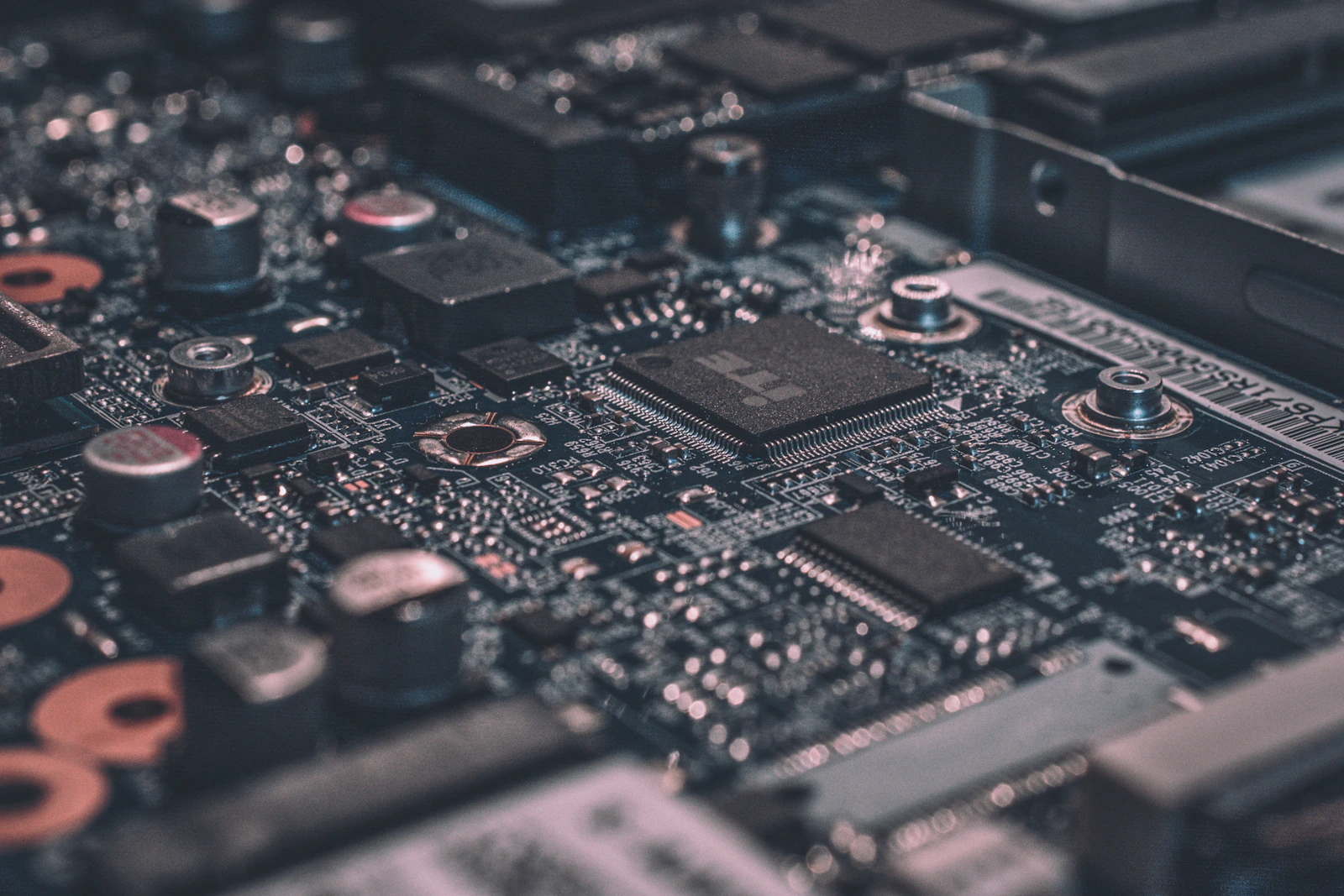
Modern robots combine multiple sensors because every individual sensor has limitations.
2. Sensor Fusion: Giving Robots a Better Understanding
No sensor is perfect.
GPS can become unreliable indoors. Cameras struggle in darkness. LiDAR can have difficulty with certain surfaces. IMUs accumulate measurement errors over time.
Sensor fusion solves part of this problem by combining information from multiple sensors.
Example
A mobile robot might combine GPS, IMU and wheel odometry to estimate its position. An underwater robot could combine an IMU, pressure sensor, DVL and occasional GPS measurements when it reaches the surface.
3. Localization: Where Am I?
Before a robot can navigate intelligently, it needs to know where it is.
"Where am I, and where am I supposed to go?"
Localization estimates the robot's position and orientation relative to its environment.
Modern robots can use combinations of GPS, IMU, odometry, LiDAR and cameras to estimate their state.
4. SLAM: Building a Map While Moving
SLAM stands for Simultaneous Localization and Mapping.
The concept is simple but extremely powerful: the robot builds a map of an unknown environment while simultaneously estimating where it is inside that map.

Autonomous navigation requires both environmental understanding and localization.
5. Path Planning and Navigation
Once a robot knows where it is, it needs to decide how to reach its destination.
| Planning Layer | Purpose |
|---|---|
| Mission Planner | Decides what the robot should accomplish |
| Global Planner | Finds a route through the environment |
| Local Planner | Reactively avoids nearby obstacles |
| Motion Controller | Converts the plan into movement commands |
| Motor Controller | Controls the physical actuators |
6. The Role of ROS 2
Modern autonomous robots often contain many independent software systems. One component may process camera data while another handles localization, another handles navigation, and another controls motors.
ROS 2 provides a framework for building these modular robotic systems. Instead of creating one enormous application, engineers can divide the robot into multiple nodes with clearly defined responsibilities.
Camera Node
     │
     ▼
Perception Node
     │
     ▼
Localization Node
     │
     ▼
Navigation Node
     │
     ▼
Controller Node
     │
     ▼
Motor Controller
7. Where Artificial Intelligence Fits
Artificial intelligence is becoming increasingly important in robotics, particularly when robots need to interpret complex environments.

Computer Vision
AI models can identify objects, people, signs, obstacles and environmental features from camera data.

Machine Learning
Machine learning can help robots classify environments, detect anomalies and improve perception.

Decision Systems
AI can help robots reason about complex tasks while classical robotics systems continue to handle deterministic control.
Different Levels of Robot Autonomy
Not every robot needs complete autonomy. Different applications require different levels of human involvement.
| Level | Description | Example |
|---|---|---|
| Level 0 | Fully controlled by a human | Basic RC robot |
| Level 1 | Robot assists with individual functions | Automatic obstacle stopping |
| Level 2 | Robot performs several automated functions | Waypoint navigation |
| Level 3 | Robot performs missions with human supervision | Autonomous inspection robot |
| Level 4 | Robot operates independently in a defined environment | Warehouse AMR |
| Level 5 | Highly general-purpose autonomy | Future general-purpose robots |
Where Are Autonomous Robots Used?

Warehouses
Autonomous mobile robots move inventory, transport materials and optimize warehouse operations.

Agriculture
Robots can monitor crops, identify weeds and support precision agriculture.

Healthcare
Autonomous machines can transport supplies, assist logistics and automate repetitive hospital tasks.

Inspection
Robots can inspect industrial infrastructure and hazardous environments without exposing humans to unnecessary risk.

Delivery
Service robots can navigate campuses, restaurants, hotels and other controlled environments.

Underwater Robotics
Autonomous underwater vehicles can perform surveys, inspections and exploration missions.
Autonomy Is Not Complete Without Safety
A robot that can navigate perfectly under normal conditions but fails dangerously when something goes wrong is not truly production-ready.
Real autonomous systems must be designed around failure.
- Emergency stop mechanisms
- Low-battery protection
- Communication-loss handling
- Sensor timeout detection
- Motor and actuator limits
- Thermal monitoring
- Watchdog systems
- Automatic safe-state behavior
- Return-to-home or recovery behavior
The Hardest Part Isn't Making a Robot Move
Making a robot move from point A to point B in a controlled demonstration is only the beginning.
The real engineering challenge begins when the environment becomes unpredictable.
| Problem | Possible Consequence | Typical Solution |
|---|---|---|
| GPS unavailable | Position uncertainty | Alternative localization / sensor fusion |
| Sensor failure | Incorrect state estimation | Health monitoring and redundancy |
| Obstacle appears | Original route becomes unsafe | Local replanning |
| Communication lost | Operator cannot control robot | Predefined fail-safe behavior |
| Low battery | Robot may become stranded | Return-to-home / safe shutdown |
A Typical Autonomous Robot Technology Stack
| Layer | Typical Technology | Purpose |
|---|---|---|
| Mechanical | Chassis, wheels, actuators | Physical movement |
| Embedded Control | MCU / RTOS | Real-time control and safety |
| Compute | Embedded Linux computer | High-level processing |
| Perception | Camera / LiDAR / sensors | Environment understanding |
| Localization | SLAM / EKF / GNSS | State estimation |
| Navigation | Planner / controller | Movement planning |
| AI | ML / computer vision | Advanced perception and decisions |
| Safety | Watchdogs / failsafes | Safe operation during failures |
The Future of Autonomous Robotics
The next generation of robots will combine classical robotics with increasingly capable artificial intelligence.
Instead of manually programming every possible situation, engineers will increasingly build systems capable of understanding goals, interpreting environments and selecting appropriate actions.
"Go inspect this area, identify anything unusual, collect the data, and report what you found."
A future autonomous robot could potentially convert such a high-level instruction into a complete mission: determine what needs to be inspected, create a route, navigate to the required locations, analyze the environment, collect sensor data and return the results.
Final Thoughts
Autonomous robotics is not a single technology. It is the combination of mechanical engineering, electronics, embedded systems, perception, localization, planning, control and artificial intelligence.
The biggest shift is from robots that simply execute commands to robots that can understand their situation and decide what to do next.
The Autonomous Robotics Revolution
We are moving toward a world where robots will not simply be tools controlled by humans. They will increasingly become machines capable of observing, reasoning, adapting and working independently.
Autonomous Robotics at a Glance
An autonomous robot typically combines:
- Multiple sensors
- Sensor fusion
- Localization
- Mapping or environmental perception
- Path planning
- Motion control
- Embedded real-time systems
- Artificial intelligence
- Communication systems
- Safety and fail-safe mechanisms
Together, these technologies allow machines to move beyond simple remote control and operate intelligently in the real world.
```