Ohm's Law and Power for Robot Builders: 6 Practical Examples
Read the post →
IOT Project · October 2026
Ohm's law, dividers, resistor and capacitor codes for robot builders.
 By pankaj · 0 robots
About
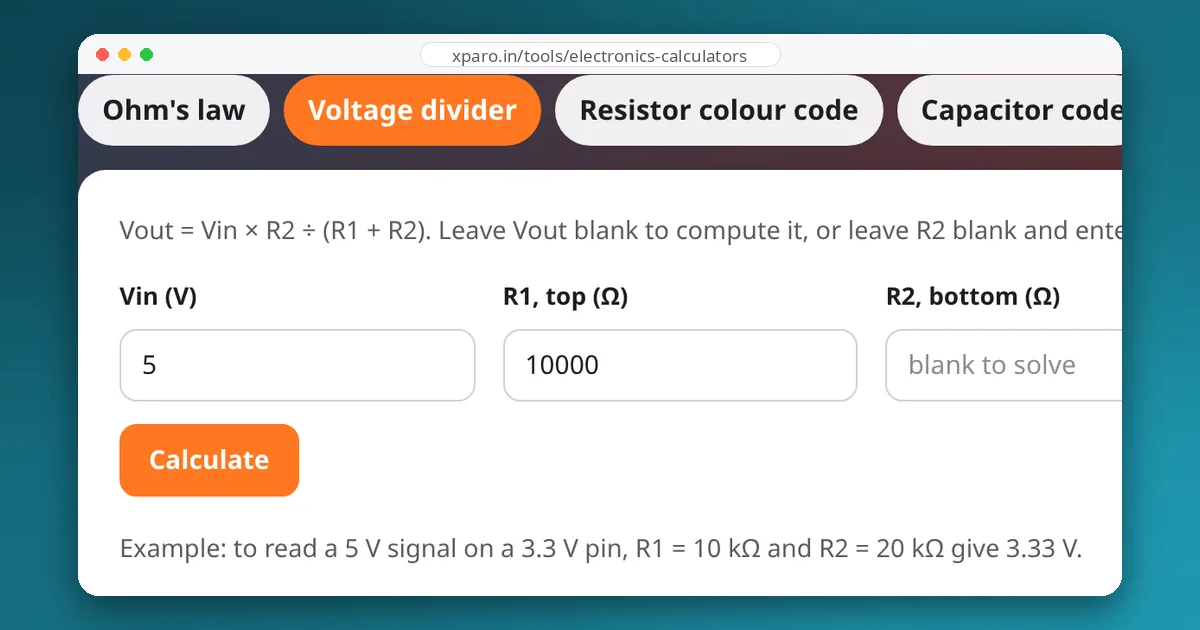
Robot builders do the same small electronics sums over and over: the resistor for an indicator LED, the divider that lets a 3.3 V microcontroller read a 12 V battery, the value of the unlabelled part in the bottom of the parts box. The Electronics Calculators collect those sums in one place.
Most online calculators handle one of these jobs and are buried under adverts and pop-ups. We wanted a fast, clean page that works on a phone at the workbench and explains its formulas, so you learn the method instead of just copying a number.
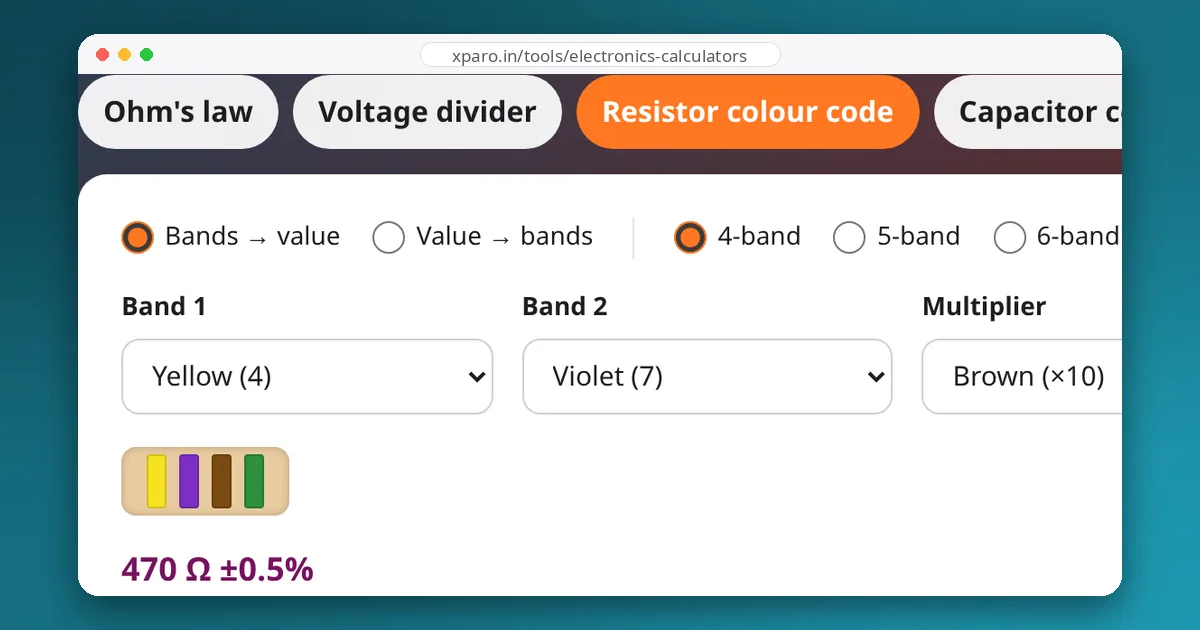
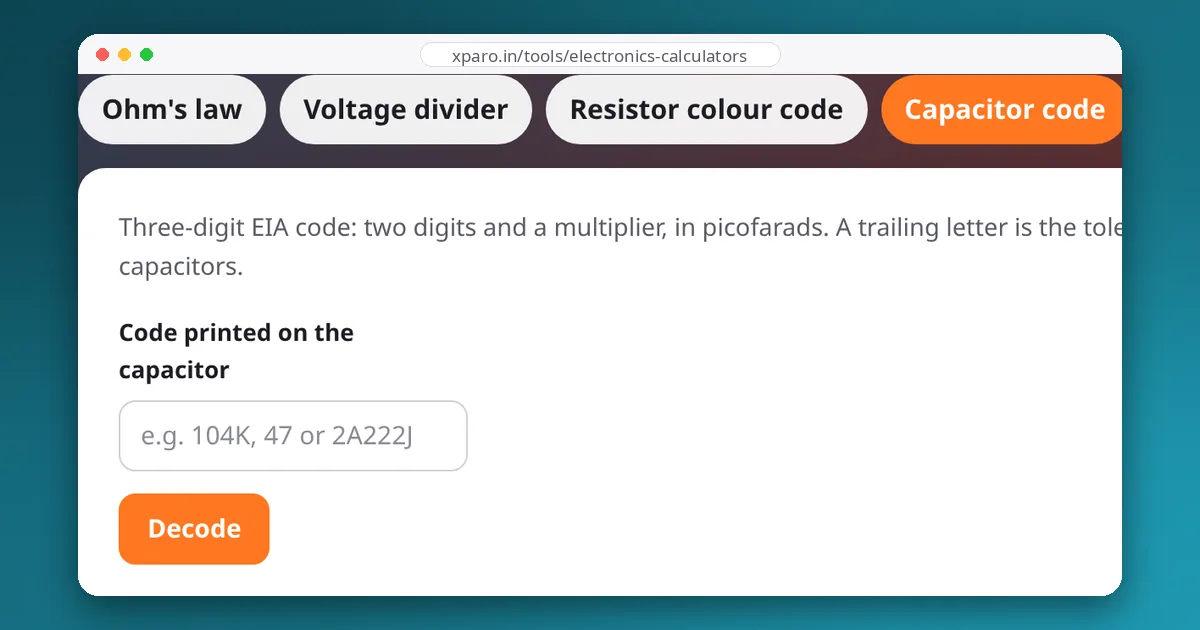
Each calculator is checked against hand calculations and standard tables: the E-series values and IEC colour code for resistors, and the EIA three-digit code for capacitors, including the special multiplier digits 8 and 9 that many simple decoders get wrong.
Open the Electronics Calculators. The guides below cover the theory behind each one with robot-specific examples.
Gallery
Team
The team that builds, runs and answers for this project on XPARO.
Updates
Read the post →
Read the post →
Read the post →
Read the post →
Read the post →
FAQ
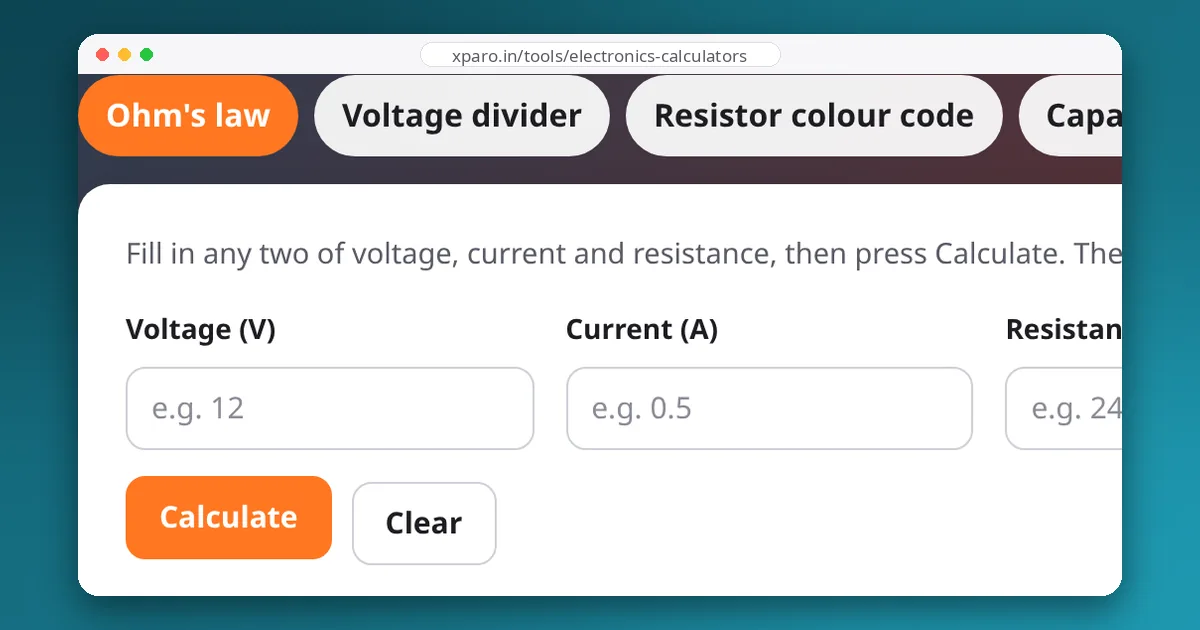
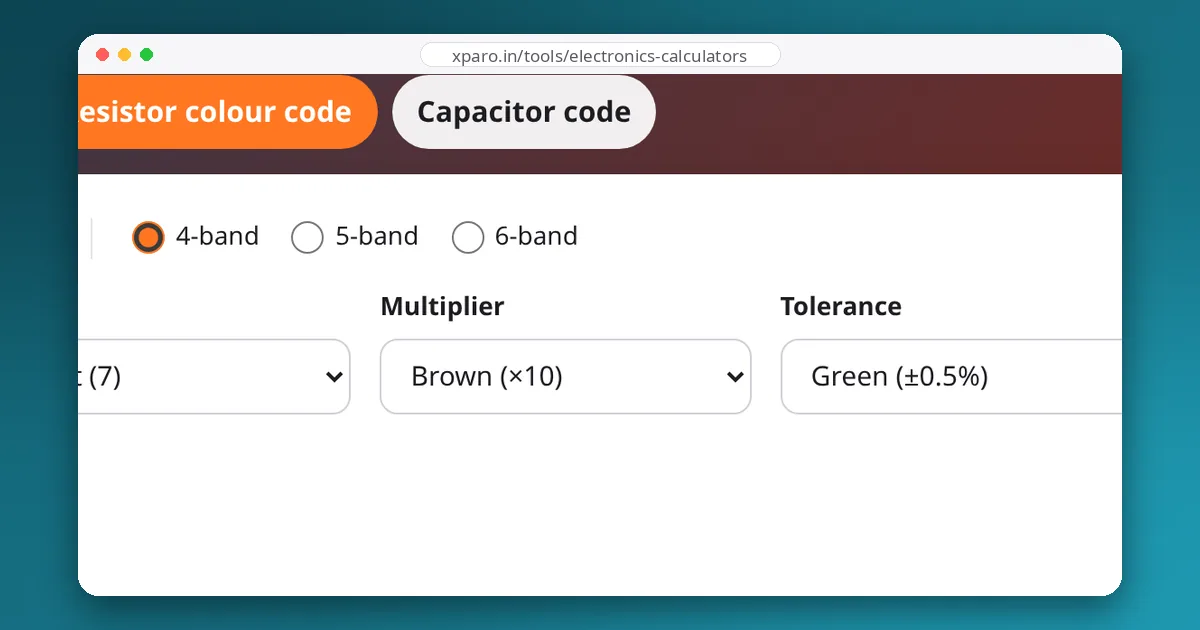
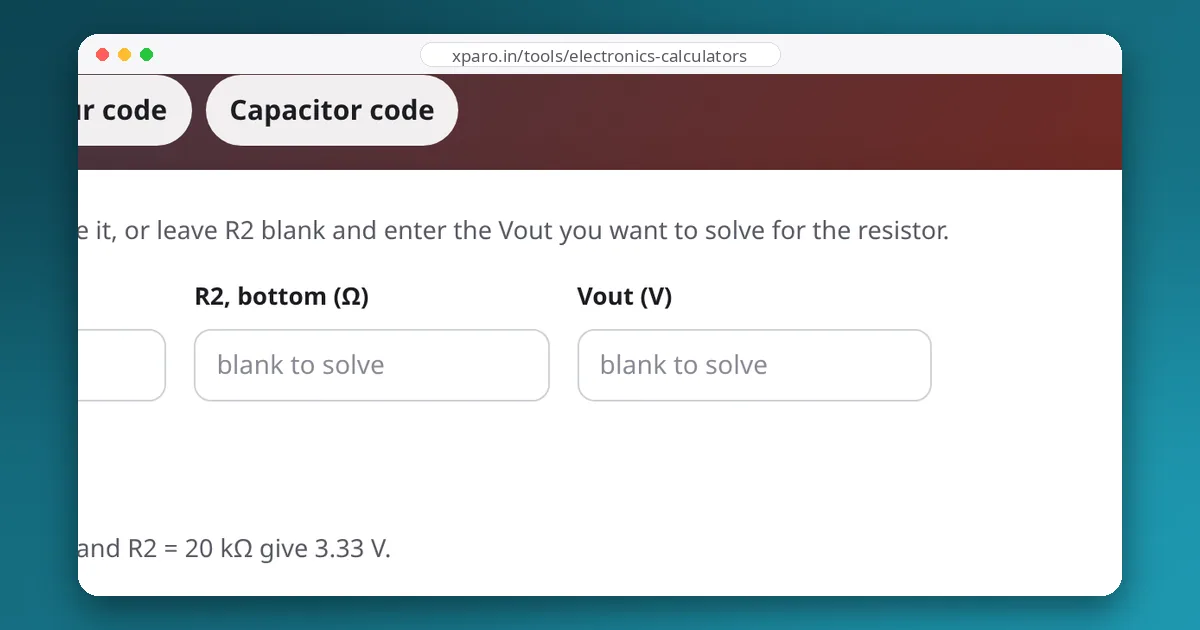
Ohm's law with power, a voltage divider solver (output voltage or the missing resistor), a resistor colour-code decoder for 4, 5 and 6 bands, and a capacitor code decoder for three-digit and tolerance codes.
No. The calculators run in any modern browser on desktop or mobile, with no account and no uploads.
Students, hobbyists and robot builders who need quick, reliable answers while wiring sensors, LEDs, level shifters and battery monitors.
Contact
Questions, ideas, or want to work with the team? Your message goes straight to the Electronics Calculators team on XPARO. Add your email if you'd like a reply.