Differential Drive Kinematics Explained: Forward and Inverse
Read the post →
Robotics · October 2026
Kinematics and odometry for two-wheeled robots, worked out for you.
 By pankaj · 0 robots
About
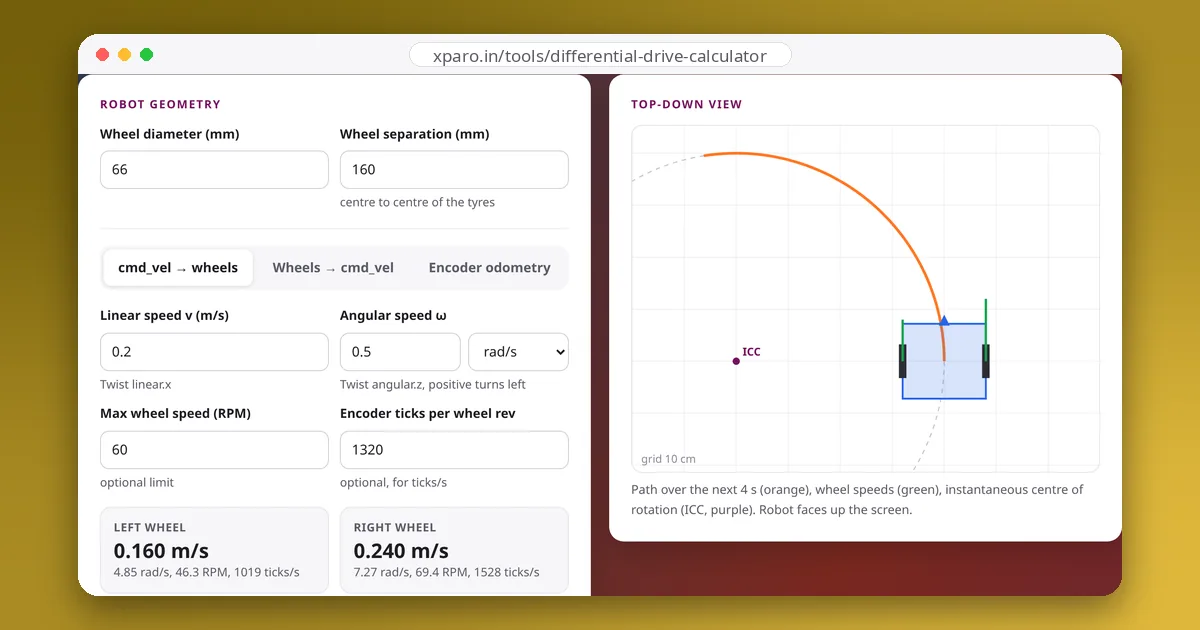
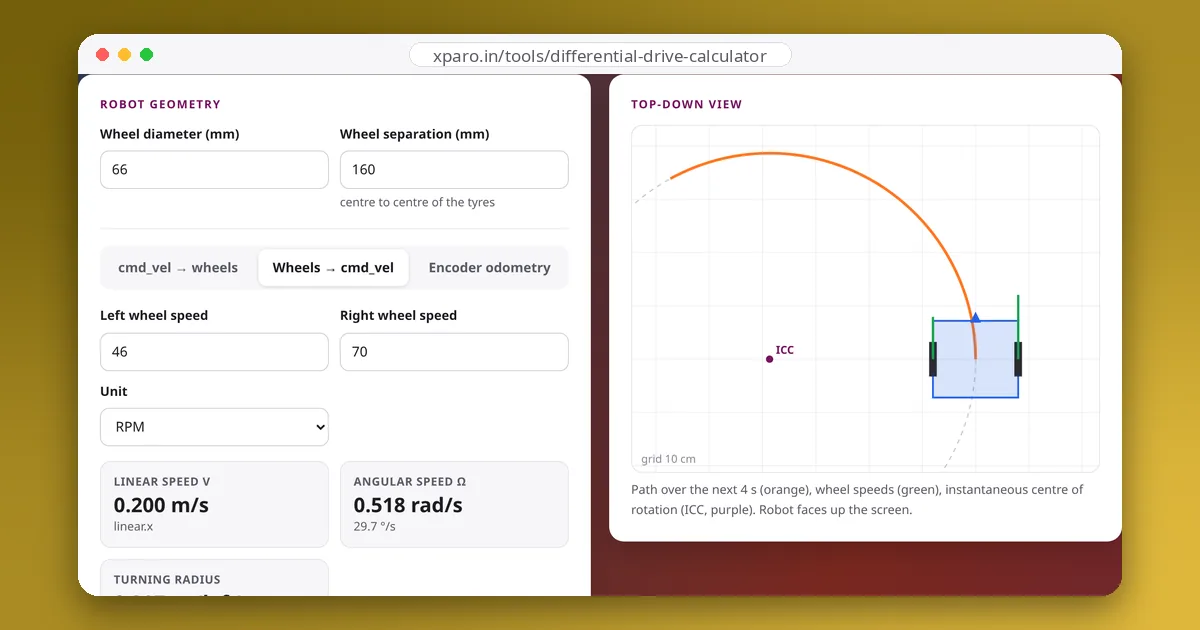
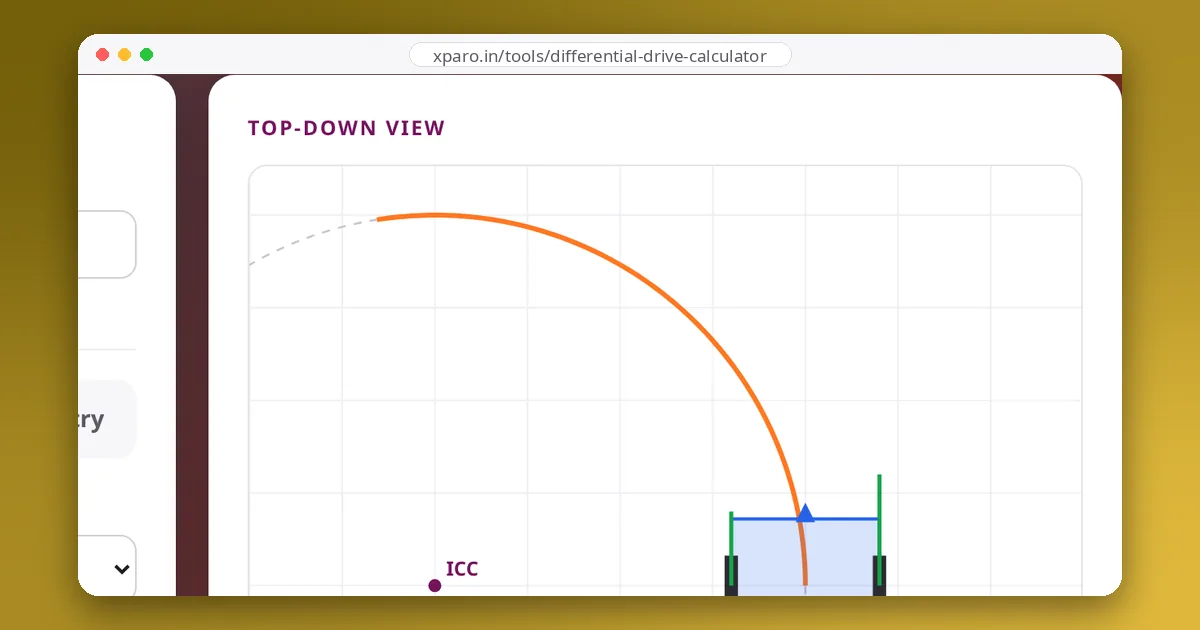
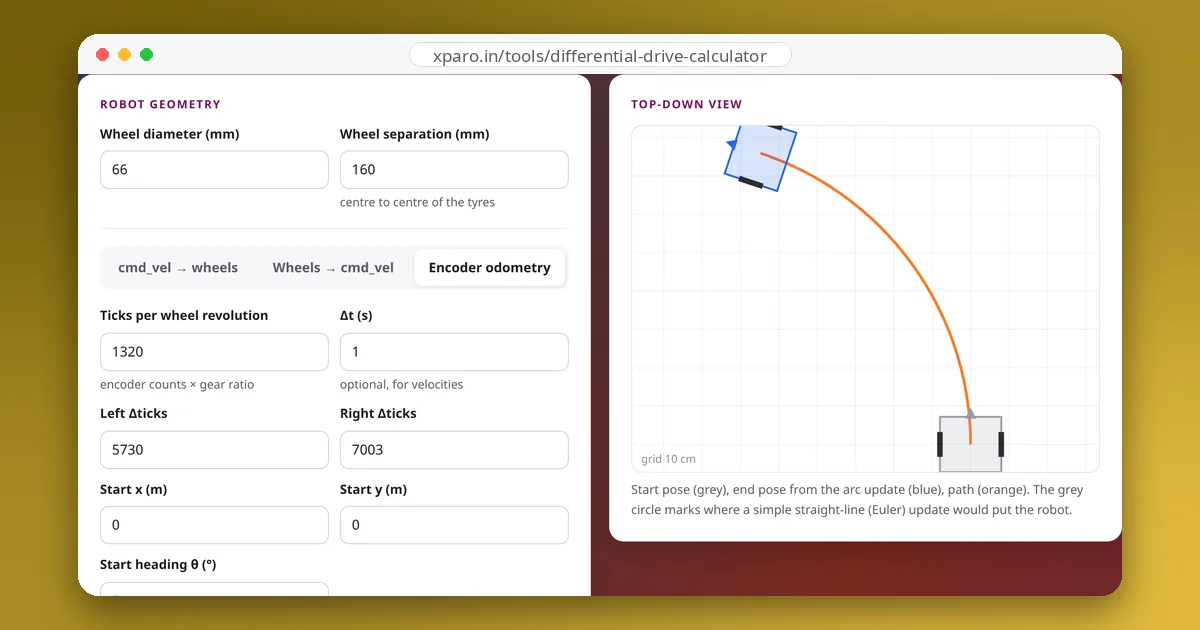
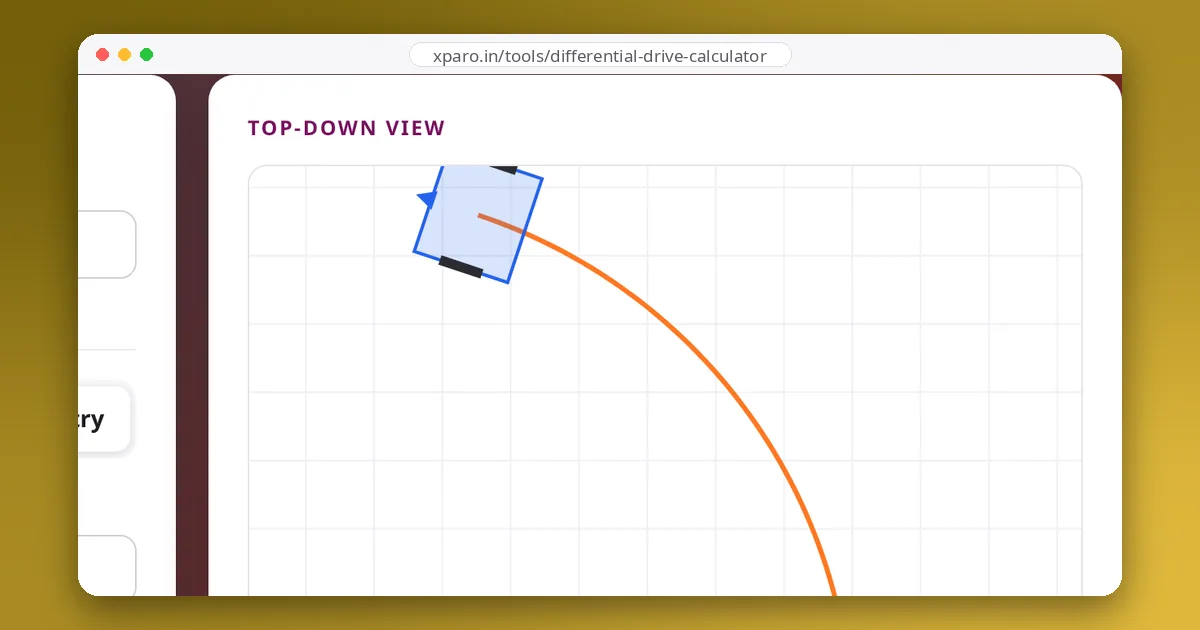
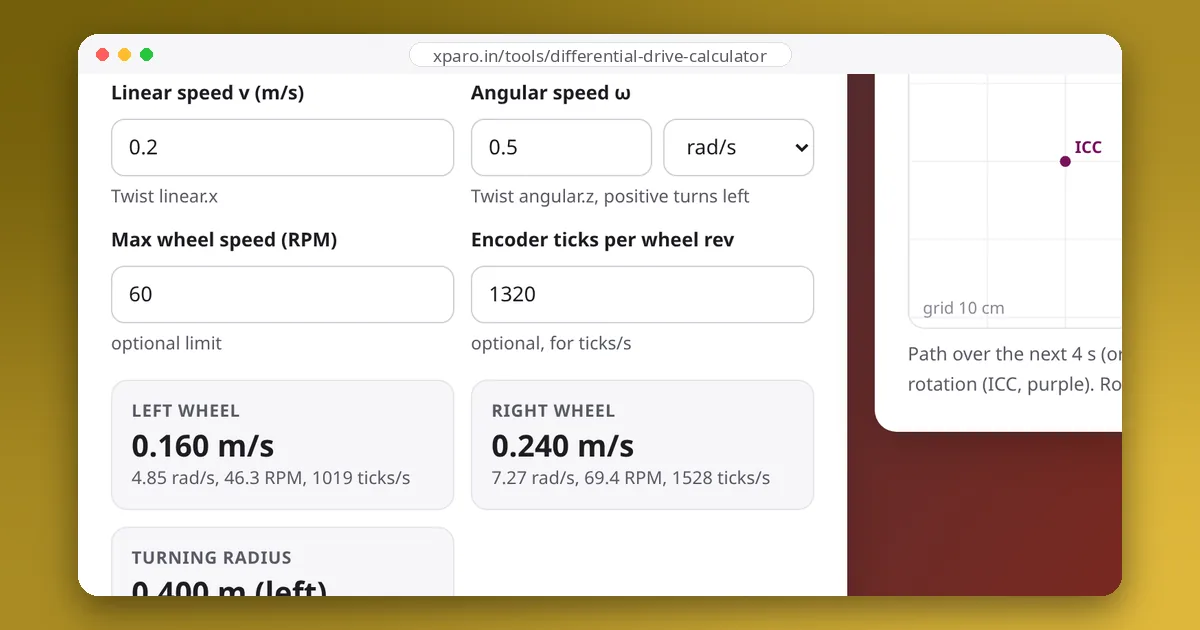
Most mobile robots steer by driving two wheels at different speeds. The maths is short, but the details (units, signs, wheel separation, encoder counts) cause a large share of real-world bugs. The Differential Drive Calculator puts the maths in front of you with a drawing of the result.
Anyone writing a motor driver node, configuring diff_drive_controller, or debugging odometry that drifts. The defaults are typical of small TurtleBot-style robots.
The calculator uses the same unicycle model as the ROS 2 diff_drive_controller. We test it with cases that have exact answers: equal wheel travel gives a straight line, opposite wheel travel gives a turn on the spot, and an arc of known radius ends exactly where geometry says it should.
Open the Differential Drive Calculator. The guides below derive the kinematics, follow a Twist message down to the motors, build odometry from encoders, calibrate the robot and limit its motion smoothly.
Gallery
Team
The team that builds, runs and answers for this project on XPARO.
Updates
Read the post →
Read the post →
Read the post →
Read the post →
Read the post →
FAQ
Any robot with two independently driven wheels on one axis and passive casters, such as TurtleBot-style rovers, and skid-steer robots as an approximation.
Yes. It uses the standard unicycle model that the diff_drive_controller uses, with wheel separation and wheel radius as the two parameters.
Yes. It is free and runs entirely in your browser.
Contact
Questions, ideas, or want to work with the team? Your message goes straight to the Differential Drive Calculator team on XPARO. Add your email if you'd like a reply.