The battery chemistry you pick decides more about a robot than its runtime: it sets the weight, how much current the motors can pull, how many years the pack lasts, how carefully it must be charged, and how you can ship it. Here is how the four chemistries robot builders use most often compare, and which one fits which kind of robot.
The four contenders
- LiPo (lithium polymer): flat pouch cells, popular in drones and RC cars. Very high power for their weight.
- Li-ion cylindrical cells (18650, 21700 and similar): the cells inside laptops, power tools and many electric vehicles, built into packs with a battery management system (BMS).
- LiFePO4 (lithium iron phosphate, LFP): a lithium chemistry with lower energy density but excellent safety and very long life.
- Lead-acid (sealed AGM or gel): heavy and old-fashioned, but cheap, tolerant and still common in large, slow robots.
Side by side
The ranges below are typical for each chemistry; individual cells vary, so always read the datasheet of the exact cell or pack you buy.
| LiPo | Li-ion (18650/21700) | LiFePO4 | Lead-acid (AGM) | |
|---|---|---|---|---|
| Nominal cell voltage | 3.7 V | 3.6–3.7 V | 3.2 V | 2.0 V (12 V block of 6 cells) |
| Full charge | 4.2 V | 4.2 V | 3.6–3.65 V | about 2.1 V per cell at rest |
| Typical discharge cut-off | 3.0–3.3 V | 2.5–3.0 V | 2.5–2.8 V | about 1.75 V per cell |
| Specific energy | 130–200 Wh/kg | 200–270 Wh/kg (cell) | 90–160 Wh/kg | 30–40 Wh/kg |
| Discharge capability | very high | low to high, depends on cell | moderate to high | moderate, capacity drops at high rates |
| Cycle life (to about 80 %) | roughly 300–500 | roughly 500–1500 | roughly 2000–4000+ | roughly 200–500 at deep discharge |
| Abuse tolerance | low: swells, can ignite if punctured or overcharged | moderate; steel can helps | high; very hard to push into thermal runaway | high, but can vent hydrogen when overcharged |
| Cost per Wh | low to moderate | moderate | moderate | lowest |
What the differences mean on a robot
Weight and size
For the same energy, a lead-acid battery weighs four to six times as much as a lithium-ion pack. On a small robot that extra mass needs bigger motors, which need more energy, which needs a bigger battery. Above roughly 5 kg of robot, lithium chemistries usually win on total system weight even when the pack itself costs more.
Peak current
Motors starting under load and robots climbing ramps draw short peaks several times higher than the average. LiPo packs handle these easily. Energy-optimised Li-ion cells may only be rated for 1C to 2C continuous, so a pack built from them needs enough cells in parallel, or high-drain cells, to cover the motor peaks without excessive voltage sag. Our guide to C-ratings shows how to check.
Voltage curve and state of charge
LiPo and Li-ion voltage falls steadily as the pack empties, so the pack voltage is a usable fuel gauge. LiFePO4 is the opposite: its voltage stays almost flat between about 20 and 80 percent charge, which is great for electronics but means you need a coulomb counter (or a BMS that reports state of charge) to know how full the pack is.
Life and running cost
A research robot that runs a few times a week may never wear out a LiPo pack. A warehouse robot that cycles twice a day wears through a LiPo pack in well under a year, while a LiFePO4 pack can last many years. Divide pack price by expected cycles to compare running cost: the chemistry that costs more up front is often cheaper per cycle.
Safety and handling
Every lithium chemistry needs protection against overcharge, over-discharge, short circuits and charging when cold. LiPo pouches have no rigid case and must be protected from punctures and crushing; a swollen pack must be retired. LiFePO4 is the most forgiving lithium chemistry and is a common choice where robots work around people. Lead-acid batteries can vent hydrogen when overcharged, so they need ventilation and the right charger.
Charging in the cold
Lithium cells must not be charged below about 0 °C (some cells specify higher), because lithium plating damages them permanently. Outdoor robots that charge in winter need a BMS with a temperature cut-off or a heated pack.
Shipping and travel
Lithium batteries are regulated as dangerous goods for transport. Commercially made packs should come with UN 38.3 test documentation. If you fly to a competition, airline rules commonly allow spare lithium batteries up to 100 Wh in carry-on luggage, and 100 to 160 Wh only with airline approval; check your airline's current rules before you pack.
Which one should you choose?
| Robot | Usual choice | Why |
|---|---|---|
| Small, fast or flying robots; competition robots | LiPo | Best power-to-weight; short life matters less |
| Indoor research and delivery robots, 5–50 kg | Li-ion pack with BMS | High energy density, good life, robust cells |
| Robots working around people, long service life, outdoor robots | LiFePO4 | Safety, thousands of cycles, tolerant of abuse |
| Heavy, slow platforms on a tight budget; stationary backup | Lead-acid | Cheap and simple, weight is less of a problem |
Nominal voltages for common packs
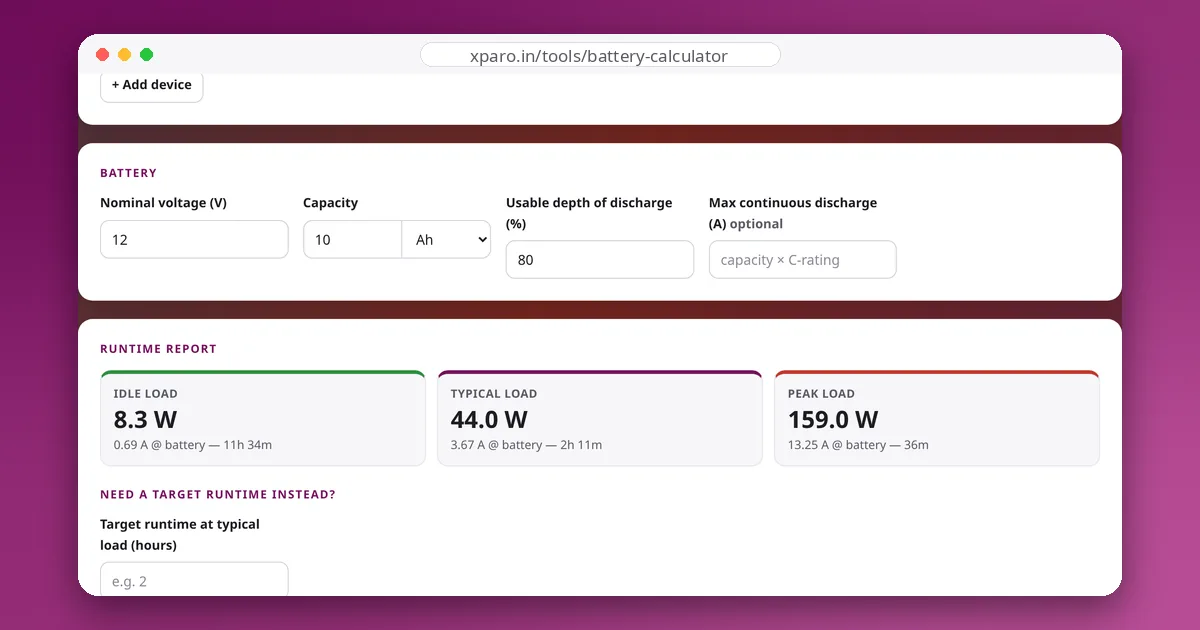
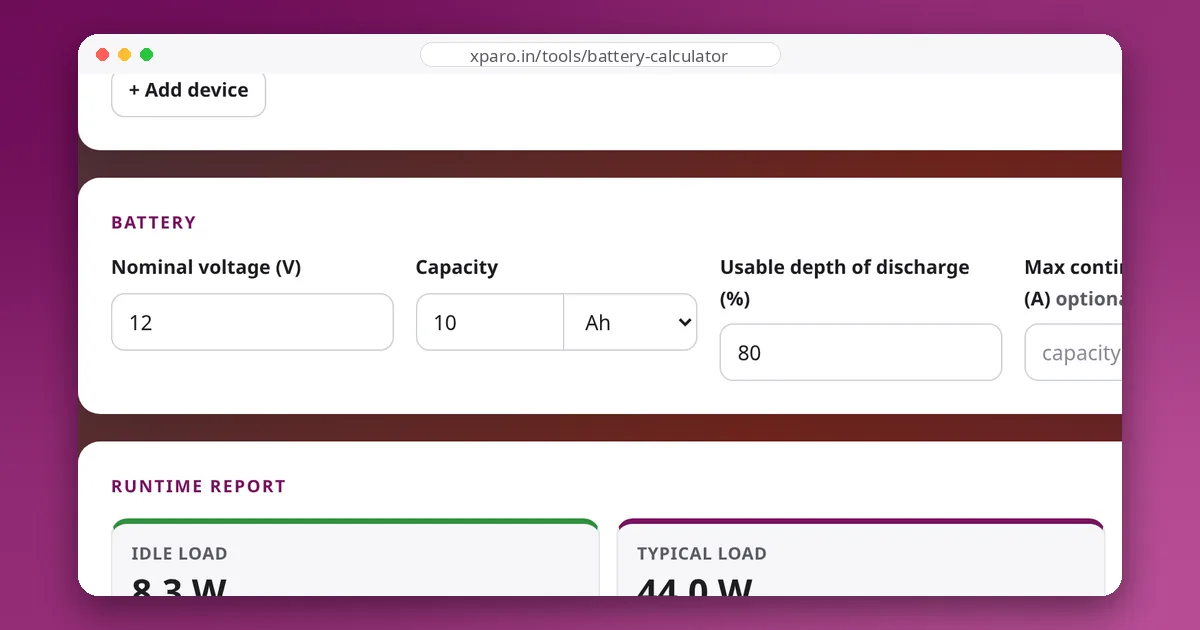
When you size a pack in the Battery Backup Calculator, use the nominal voltage of the whole pack: the number of cells in series times the nominal cell voltage.
| Pack | Nominal | Full | Typical cut-off |
|---|---|---|---|
| 3S LiPo / Li-ion | 11.1 V | 12.6 V | 9.0–9.9 V |
| 4S LiPo / Li-ion | 14.8 V | 16.8 V | 12.0–13.2 V |
| 6S LiPo / Li-ion | 22.2 V | 25.2 V | 18.0–19.8 V |
| 7S Li-ion | 25.2 V | 29.4 V | 17.5–21.0 V |
| 4S LiFePO4 ("12 V") | 12.8 V | 14.4–14.6 V | 10.0–11.2 V |
| 8S LiFePO4 ("24 V") | 25.6 V | 28.8–29.2 V | 20.0–22.4 V |
| 12 V lead-acid | 12 V | about 12.7 V at rest | about 10.5 V under load |
A 4S LiFePO4 pack is a near drop-in replacement for a 12 V lead-acid battery in voltage, at around a third of the weight. Use a charger made for LiFePO4, not a lead-acid charger.
Summary
There is no best chemistry, only the best fit. Start from what limits your robot: weight and peak power point to LiPo, energy and robustness to Li-ion packs, safety and cycle life to LiFePO4, and up-front cost to lead-acid. Then size the pack with the runtime method and protect it as described in our battery safety guide.